Tuesday, February 25, 2014

Are compassion and love compatible?


I don't have an answer to that question, but I was recently challenged with it by my teachers. It is something that, as I talk about it, meditate on it and engage in all sorts of Buddhist froufrah about figuring out how -to -not-answer-questions- that -have -no- answer -but- using -the -process- to-gain-a-deeper-understanding-of -what -is-really-involved-in-the-question kind of hobbies Buddhist find funner than say...watching the latest episode of Orange is the New Black... starting some very interesting and thoughtful dialogues around me. I am grateful to have been tasked with this hua tuo, because it is bringing life into focus swiftly.

With a hua tuo, a question is asked that the person seeks not to answer, but to understand its full nature and the fullness of the nature of its parts. Classic examples are "Who is chanting the Buddha's name?" or "Who is dragging this corpse around?" They are not reccomended for novices as they require a degree of insight and then practical training that can be daunting and what will happen is the novice will declare they have an answer and there is nothing more to think about. In a nutshell, good questions lead to a deeper understanding of the transient nature of life and how each of us requires delusion to survive. It is the revelation of the delusion one seeks, knowing that all that can lie underneath is yet more delusions.



So what you do, let me correct that, let me tell you how I am approaching this one. I wrote the question down on a piece of paper and I sealed it in an envelope. There are lots of qualifiers about the question and how things should be defined etc and so forth but none of that gets written down because it isn't important and they aren't true. When we say words like "compassion" or "love" they have no meaning because they have so many possible meanings. To understand the fulllness of the questions you must be able to sit with all the levels and possible definitions of each word. This is something western philosophers run from because without a declared boundary and meaning; theories and bias just don't work. The hua tao is a means of teaching one to reach a space beyond understanding and witout definition because all definitions are just made up to suit the moment, era, and so forth anyway.

I wrote a date on the envelope that is 28 days from the day I sealed it. I propped it in a prominent place where I must always see the envelope and date. For the next 28 days, every day for one hour, I am engaged in performing 14 intensive exercises - including situps and pull ups - its not mystical, its about physical discipline. I am working to correct my diet and drink more water. I follow my exercises by a period of seated meditation in which I watch the finches and mindfully focus on my breathing and...the finches.. As I move throughout my day, I do readings from several sutras and texts.

I never think about the question directly. I don't worry it like a dog does a bone or sit and think it through. If you have been around the meditation world much you know that thinking is the first sign that things are going off track. You can justify anything. Confirmation bias rules and the brain would really really prefer to go onto the next shiny thing so it will skip details. I don't sit down and logically process it, I just keep it in the forfront of my awareness and in doing so, am becoming more aware of so many other things beyond the consideration of myself. I don't have a series of related readings to pursue because confirmation bias means I wouldn't see the whole text anyway. I am just returning to some core sutras, mostly the diamond sutra. I do not know what I will find on the 28th day when I open up that envelope because the other part of it all is that when I wrote down the question, I also write down what I really wish the answer was and what I most fear the answer will be. You do this understanding there is no answer to this question, but you are acknowledging the rules of surety you have written inside you that truly color your perception.

To work a hua tuo is life changing on many levels. Frankly, it is a pain in the ass and annoying. It interferes with plans, casts everything into question and makes you feel like there is just the slightest veil between you and the rest of the world.  It is also the most wonderful and calming thing to do. Even in the depths of the processs, there is this beautiful sensation of peace and placement that is just....amazing. Oh and one other thing, one of the reasons that the practice is reserved for advanced students is there is magic involved - the kind of magic that is noticable and unnerving to people around you but that is a powerful reminder that we know not where we are. Magic that is to be noticed but not given more weight than a passing cloud.


The mad kitten had an absolute nuclear meltdown the other day. Screaming, biting, kicking, attacking me, attacking the fish tank (that she rarely even acknowledges), pushing things over, biting cords. I have never seen anything like it. She would run from thing to thing misbehaving and then run to the food bin and slap it like she normally does when she wants a treat. I turned everything off and just lay down on the floor after putting up with this for 45 minutes and she ran over and curled into me and passed right out.

So I cancelled all my appointments, got a kitty wheat grass salad plant for her and spent almost all weekend with the computers off and righting her world. Not only have the finches arrived and people shifted from fawning over her to barely notcing her in the glare of finch cuteness but I have been so busy I can barely breathe. I haven't played with her in almost two weeks and she finally had it.

You can't always do what you want to do or live the way you ideally want to live, but you can choose to take time out and put back to the rights something that suffered and then work harder to not let that happen again.

Monday, February 17, 2014

How to make a profit and succeed in life

The past week has been one of great contemplation about how to make a profit and what constitutes success, which is amazing because it seems like I didn’t have time to breathe. We had two rounds of snow, I had six emergencies, several surprise deadlines and the little ass was in high gear. A bird person suggested that I get more toys of the foraging type and rotate them around the cage to keep the little sh*t busy. The finch cage now looks like a carnival.

you get the idea

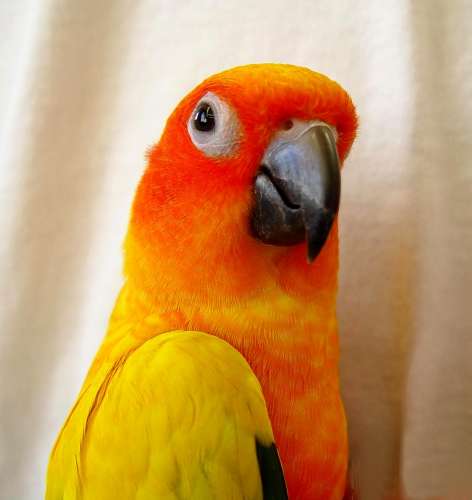
The good news is that not only did he calm down, but the shyer ones started to come out more and forage around on these bizarre little perches covered in festive paper and little bits of string. The cat has taken to sleeping on her back beneath the cage, which is a level of cat language I can’t even guess the meaning of. The thing that worries me is that while shopping for anti-bullying devices for finches, I came across Clyde. Clyde is a sunburst Conure who is “shy, but curious and friendly.” I spent some time with Clyde and briefly fantasized about justifying adding Clyde to the household when I pulled myself up short and asked, “Hell is with this bird thing?”

The fish are business. I run a Zen center and they are calming. I have always loved dogs and cats, cats slightly more although the mad kitten has been giving that preference a run for its money for years. Much as I love dogs, they are very similar to having a child and having both raised a child and had a dog for over 12 years; I think I am done with that. Living with a cat is like living with a little alien. Dogs know you are not a dog. Cats can’t tell the difference and just think you are stupid as all get out. But birds? The bird thing has been growing over the past few years and has hit full on in recent months (witness the finches). Now I look at a bird like Clyde and my first thought is – yes.

I looked up the general meaning of birds and was surprised to find out that the association with freedom and so on is minimal. They are considered to embody the characteristics of the divine and to represent rebirth, re-newed life and hope for the future. Now, my growing bird fetish begins to make sense. They are also supposed to be messengers from what it is that cannot be seen.

Clyde knows
So I am living with a pocket full of futures and trying to live up to it. In the past week, much of my work and discussion has revolved around:
·         Misanthropy
·         Compassion
·         Love
·         Whether or not compassion and love are compatible
·         The importance of meaningful work
·         The misperception of balance in modern life as meaning one does not participate in meaningful work when one has time to devote to it

·         How one defines success
·         How one creates a profit that is compatible with the idea of meaningful work

It is interesting to me to watch two opposites pull at each other in what people are looking for in relationships – they want someone with a passion, but prefer someone who is not passionate about their passion. Somehow, the notion of relaxation has evolved into a state of apathy and passivity. When you consider that activity and mental engagement create healthier states of mind and body; it makes one wonder where the idea of “doing nothing” being rejuvenating came from.

Many of the people who come to me for help in trying to change their lives have habits that only appear at night and on the weekends. It is easy to spot that these are times that in the name of relaxation and balance they engage in intensely passive and boring behaviors. The statement of “boring” is not judgmental; it is based in a certain fact about our brain. If our brain can process 25,000 words (written or spoken) a minute and we read about 300 a minute or speak about 150 words a minute; watching TV or a movie is going to bore the bejeesus out of you without you realizing it. It is why reading is a much more engaging pastime because your brain can be busy taking in words, building full images and making connections to memory, sounds and smell while also applying what you are reading about to other issues. It is also why walking in mostly silence with someone can be more rejuvenating and create a greater feeling of intimacy then hanging out and talking non-stop with them. If you are too focused on the conversation, there is no conversation interesting enough to keep your mind occupied. It is why meditative practices can be so centering, by sitting and opening your mind – you let your brain engage itself as much as possible – which feels better than following you around like my cat follows me and wondering how it is possible I have lasted so long given that I just don’t seem to get it.


All of this plays into the idea of how to make a profit based upon what you decide is success. GK Chesterton pointed out that with the dawn of industrialization; the privileged classes began to determine what success was for all. Everyone needed housing. Yes, they do. But what everyone needs is housing that they have claimed as a home. A bedroom, living room, kitchen and bath do not make a home. The sensation that your home equals what you value and matches where you are on your determined path of success is more important to the psyche than a generic box to provide one with shelter. Chesterton warned about trying to equalize notions of success because it would eventual destroy innovation, integrity, accountability and the drive to take responsibility. You can see why he is one of my favorite authors.

In Buddhism, there is a constant reiteration about getting rid of desire and being content with where you are now. Nowhere does it admonish not to move forward and build for the future, but it cautions against seeking success for the sake of success or comfort’s sake. Without meaningful purpose behind the success, it becomes empty and eventually turns on the person in the form of illness, disorder and addiction. In fact, complacency and apathy is seen as an even bigger evil than the pursuit of desire.

Lao Tzu said that a scholar who cherishes the love of comfort is not fit to be deemed a scholar. Therein lies the definition of profit and success. What is the profit for a scholar? Recognition or knowledge? What is the basis for their success? If they strive to be recognized then they are falling into a love of comfort, if recognition comes from effort to gain knowledge and to share it for benefit of others – that is success. What is benefit to others? This is tricky. What is of benefit to others is what is of service to them and that is determined by the other, not the author. The modern world has reversed that order and tries to “help” people by pre-determining what their problem is and what the help should be. This negates the validity of the person, their life and their goals.

Success is defined by many things. Yes, it does include the ability to pay your bills and not worry about food and shelter but it is more defined by the ability to be fully present in life. Profit is that which success provides that allows one to continue to move forward with success. There is no profit and no success in apathy, complacency or passivity. One moment of that can undo months of passionate effort. That is not to say that you have to be full out in one way all the time, but care must be taken to make sure you are not wasting time when you are nourishing and replenishing your resources. Modern people are great time wasters. 

When you waste time, you waste life.
When you waste life, you live with regret.

When you live with regret, you lose the chance to see the future in such shared symbols as a shy bird with large eyes, or a person who has an idea, or the potential represented by someone who comes into your life who doesn’t immediately fit into a slot to define what your relationship will be.

To live without regret is to know that you were fully engaged and that you tried. Having failed or succeeded, you continue to examine your life to learn how to incorporate the experience and knowledge into something new that will benefit you and others as well, should it be what they are looking for.

Sunday, February 9, 2014

Art and Lies - finding out what you really do for a living

This past week has left me, on at least three separate occasions, wondering what it is I actually do for a living and how I came to do it. It’s not as simple as it sounds to answer the question “what do you do?” That has been the age-old mark of the difference between the old country and the new, that Americans leap to wanting to know how you earn your money while Europeans meander around your interests first. This is a stereotype that is slowly fading away and leaving behind a new and much more unpleasant taste.

Why is it difficult to know what you do? If you are a fitness instructor, you instruct people in fitness. If you are a financial investment adviser, you advise on finances. If you are a programmer – well you program; and so on. But these aren't really descriptions of what you really do – they are titles of categories within disciplines. A fitness instructor may work only with people engaged in triathlons or other competitions, a financial investment adviser may focus on retirement funds or start-up capital. These are called the specializations of the general category – within the specializations there are skills. One programmer, who only programs in Java, may excel at creating debugging programs -a skill within a specialization.

The term “generalist” is becoming popular again. Sadly, it is being applied by people willy-nilly to those who are little more than specialists or dilettantes. A generalist is someone who has comprehensive knowledge in several unrelated fields of five or more disciplines along with special skills associated with each and can inter-relate the areas of disciplines and skills through critical problem solving that uses a holistic language of contexts to preserve the integrity of the problem without losing awareness of its broader impact. One of the best ways I have heard them described is that no matter where you plunk a generalist down, they will do well and also find a new way of doing things while realizing how to do something better somewhere else totally not related. The term generalist used to be interchangeable with polymath with the polymath just being the generalist on steroids and often hitting genius level in their inventions across several disciplines.

A specialist is someone who has knowledge related to one to five disciplines that are related and has advanced skills in areas of these disciplines. They can do much within their general field and have critical problem solving skills that relate to within that field. They can only apply their skills to other fields by forcing an understanding of the unrelated problem into familiar terms first.

A dilettante is someone who has broad knowledge of many areas but little applicable skill in any (beyond a beginner to intermediate level). They know a lot about many things but can do little in any and lack the capacity for practical invention or critical problem solving.

The confusion that is happening today is that someone (a specialist) who has experience in one to five related areas,  and the skills within their sub-specialties is being called a Generalist.

Here is a list of commonly accepted generalists/polymaths:

Leonardo da Vinci
Thomas Edison
Nikolai Tesla
Benjamin Franklin
GK Chesterton
Michelangelo
Galileo
Paolo Sarpi
Copernicus
Francis Bacon
Servetus
Ibn al-Haytham
Ibn Sina
Omar Khayam
Hildegard of Bingen
Trotula of Salerno
Maria Gaetana Agnesi

One of the common attributes of a generalist/polymath is they have a highly developed skill and talent within an art form (painting, writing, music etc.). They also tend to excel and work within physical science, chemical science, sociology, psychology, economics, engineering, manufacturing, philosophy and religion all at once while setting poems they wrote to music so people who can’t keep up (and don’t need to) can dance along with them. The other common attribute of a generalist is all of their knowledge results in the production of something. They are often accused of not finishing things (da Vinci) but that stems from their discovery that the idea leads elsewhere before it can be finished. Leaving something undone because you are gaining the skill to do it is much different than dropping an idea or just not finishing what you have started.

Recently, a friend of mine went to see a lecture by someone who billed themselves as a “generalist” and charged quite a bit of money. It became quickly apparent that this person was an “opportunist.”

Is a generalist better than a specialist? No, the world needs both. The generalist can see how disparate things and influences relate and can allow for this understanding to be fluid so they can spot when they do relate and when they cease to relate. For example, it is the generalist who will see that clouds in the sky and seeds in the ground relate, but only when the clouds bring rain and the seeds are in the right temperature and age to grow. From there they invent harvest times and train schedules to coordinate every aspect of the system of economy. It is the specialist who then discovers what depth the seed must be planted and how much water they need to grow best. Without each other, neither can do much.

The dilettante – is not worth much at all except for one thing common to all dilettantes, they tend to be very good at spotting what is new and claiming expertise in things that don't require any work or study at all (think Life Coach). This is essential for the specialist and generalist as it serves to bring in new ideas from random places. Don't get me wrong, life coaches can be very helpful, they are what would be called a best friend if you weren't paying for the right to talk to them.

GK Chesterton warned that the downfall of the Western culture and economy would come when we began to have more specialists than generalists. ‘Begin with a general education,’ he never actually said, ‘so that some may find their specialty and others may be allowed to continue to go broadly into what makes the world work.’ We are rife with specialists now who take advice from dilettantes.

What happened to the generalist?

That is easy, the generalist was killed off with the advent of the business plan and the social integration of the question, “How are you going to make a living doing that?”


It isn't law and regulation that has choked ingenuity and innovation, but the expectation that you can lay out on a piece of paper a surety for investors based upon something that does not exist. It is the investor that has killed the economy, not the government. If you read most regulations carefully there is ample room to invent and get things going, but without the money from an investor, there is little you can do. The investor’s law is that you must prove a return that will benefit them.

I can – as an experienced writer – prove anything to you.
It doesn't mean it is real.

I can find studies to cite and all sorts of statistics, but none of them are anything but statements of convenience. If I have an idea and am presenting it to a potential investor one way and another investor promises more capital only if it does the exact opposite – I can take the studies and statistics and present a different interpretation of them to suit the new person’s  needs.

This is called lying.

But we have evolved into a culture of lies because we have lost our generalist vision. Our Ben Franklins have gone missing. There is no way that one thing can solve anything, or even be the “key” if you really understand how things work in life. Everything is a bit of the puzzle but nothing comes with guarantees. What does happen is a trend. Things will trend towards one result or the other. But that is not a surety for trends most often are rooted in emotional behavior.

This is where art comes in.

In order to control the direction of our trend we have to convince our emotional selves that there is a predictable outcome. Why? Because if we believe we know what to expect, even if it is horrible, we tend not to panic. Not only do we not panic, we spin a fantasy that makes even the most horrible thing a blessing in disguise. We create images and beliefs surrounding things that we want to be one way (and not another) and use them to bolster our bias to make the world work for us. We paint pictures, make movies, write poems, sing songs that support a context in which everything that happens is understood (even if the context is that nothing can be understood) in order to believe that there is one key that will take all the questions and insecurity away and we won’t have to worry about anything anymore.

Therefore we pursue our heavens, nirvanas, pure lands, aliens, angels and self-awareness with a passion that is usually reserved for someone who is starving pursuing food.

We reject any suggestions that what we believe is the way to go may also mean many other things. If what we cling to can also be something else for another, then it has betrayed us (emotional mind).

So how do we get back to a cultural way of thinking that allows for possibilities and recognizes accountability and impact? Where we ever there?

Perhaps the question more important to begin with is what do you do for a living? Figure out what it is you do now for a living and discover what it means about who you are in life. We have who we believe we are, who we would like to be, who we fear being and we spend tons of time and money examining all of those – but rarely do we closely examine the lives we live for their reflection of who we are in the present.

I have almost named one of the little finches. The white one, who I was so concerned about before, is now referred to as “the little ass.” He is a bully and a jackass to the point of ripping feathers out of the others to keep them away from the one treat stick he prefers. I say that, and then the next minute they are all getting along swimmingly.


Wednesday, January 29, 2014

One crow for sorrow

There is a children's rhyme that I didn't know until I met a woman in my writer's group for whom it holds a special draw.

"One crow for sorrow,
Two crows for joy,
Three crows a girl,
Four crows a boy,
Five crows are silver,
Six crows are gold,
Seven crows a secret -
never to be told."


It is human nature to seek to see omens and symbolism in events that while maybe not random, are natural and make much more sense than the stories we try to place on them. But it is also a part of developing human nature to assume that whatever happens in the natural world is all about us. I say "developing" because it is a recognized part of human development to first go through a stage where there is no recognized division between you and anything else (ie. they upset me and then got sick so I am the cause of it); to thinking that you are the focus of the Universe (ie. I didn't know what to do and then an eagle flew overhead and I knew it was the right decision); to the the mature outlook in which all is held in balance (ie. I don't know what the f**k just happened but I better sit down and think things through again).

It is too easy to dismiss things that happen as both being completely random, or to equally dismiss them by assigning them a value that we can interpret. That assumes a godlike ability to know the ways and workings of a Universe that has been around far longer than we have and does quite a few things without taking us into account thankyouverymuch.

Do things happen randomly that mean nothing - yes
Do things happen that have deep meaning and purpose - yes
Do things happen coincidentally that serve to illuminate our situations - yes

Do all of the above mean you can predict or understand what something means? No. All of the above should be a reminder that contemplation of your actions and motivations is the only way to know how to handle life.

We are driven by something called the Pollyanna Principle. It is the inability to face ugly or uncomfortable realities for very long. We prefer to see the sunshiny things in life, and if we can't find puppies and ponies, we will settle for the reverse sunshiny quality of meaning and purpose. To think that bad things can happen just because they can and without a deeper meaning or purpose is almost unbearable to endure. 

This can make understanding karma complicated. Karma implies that there is cause and causation. But it doesn't imply that there is cause and effect, that is the common mistake that people make about karma. Things don't happen as retribution or reward for things done or undone in this life or others, things happen because of what was caused to begin, or not begin, because of what you did or did not do. The difference is that one assumes a judgement that places you squarely back into a self-centered worldview full of ego, and the other assumes that things play out. Some you can kind of tell how they are going to go, and some can take eons to develop - and change course as they go and evolve. To live without causing harm then, is to seek to be the cause of that which causes no harm. If you can then define what this will be, you can go to the head of the class and have a bon bon while the rest of us try to catch up.

I am learning much from the finches. They are not at all what I expected them to be like (ohhhh, surprise). 
I have four, not two, and am still not sure how that happened. I also made a spot decision based upon me that is playing out in very interesting ways. Perhaps, these finches will be the greatest teachers of all in my life. I am humbled by what I have already learned.

You see, 
it was a dark and stormy night (it was), but it was warmer than it had been and a radical cold spell was coming so I decided if I was going to get the finches, that was the day to do it. The bus doesn't even come close to the finch place so I walked the mile and a half in. I figured (silly me), get finches and get cab. I played out the whole scenario in my head while walking.

In the store there were about 40 zebra finches jammed in a cage and then two other cages with 4 finches each (plus a ton of parrots and conures). The finches that were separate were beautiful and very high priced. Since this was my first finch foray (forgive me for that) I decided on the $9.99 ones. I told the little old man who fit under my arm pit that I wanted four (still don't know why) and that one of them had to be one of the white ones. I started to watch him catch the birds (shove arm in cage, grab wildly, curse in Portuguese) and said, "I'll leave and come back so you can do this without me watching." I liked the white one because it was so beautiful and so different. When I came back he handed me a tiny box with holes in it and 4 very pissed off finches.

Called for a cab. Called five companies and was told that they "didn't have anything in that area." Which to me was the whole point of a cab, you drive the cab out to get the fare but who am I to argue? So I stuffed the little box in my book bag and walked the 2 and a half miles home, on a cane, in the increasingly cold weather with my headphones in and chants cranked so I wouldn't hear any feathery little death throws. 
To say that they had bonded by the time I got there is a bit of an understatement. It took them about 15 minutes to overcome the shock and discover what a student refers to as "finch nirvana." The 3 foot flight cage full of swings, perches, ladders, treats, nests and toys.

It took me 20 minutes of watching them to realize I had no right to name them. I can tell two of them apart. One is white, one has a band on his leg. They are all male so they all sing (squawk/talk). The three others have the same coloring. En masse they are referred to as "the finches," "the busy bees," or "the little lunatics." Between the four of them they must have a brain the size of a drop of water but they are remarkably busy, attentive, interactive and communicative. The mad kitten is exhausted. Its like finally getting cat cable. She can't reach them (something it took them about a half hour to figure out) but you can tell she dreams big.

As birds of warning, they are meant to teach you about what it takes to keep relationships and community healthy, and again, already I am humbled by the experience of what they reveal to me. They naturally pair off, they are driven to it. I knew already not to get an odd number because they would bully the lone bird. I didn't expect the difficulties the little white one would face. He is paired, sort of, with one of the others that deigns to sit a few inches away when it is time to sleep but otherwise, the white one is pushed off. I felt so bad I was considering going back and getting two more, another white one and another regular. Until I saw that the white one is very aggressive, bullying and perhaps the most confident of the birds. If they are fighting, I now know its because the little white one is chasing one of the others away from the treat dish he has claimed. When I put an absolutely traumatizing new toy in (a crumpled ball of newspaper) the other three flew around like it was the end of the world and it was the white one that calmed down first to go investigate and return order to the cage.

When they don't respond to something new, I have learned, it does not mean they do not like it. They just are momentarily not into it. They don't like human interaction and don't want you to mess with them, but they like to be included and acknowledged.

They are as jealous of the cat as the cat is of them for attention.

They don't like music, but they do like certain pitches of instrument and voice. They love it when I use the bicycle pump (it has become how I say hello). They are mad for the sound of ripping duct tape.

And the group mind experience, that in and of itself is proving to be a revelation about how we work in groups too.

One thing I have also noticed is how they immediately changed my life. I know longer feel driven to go seek a cafe for some social company when working, I would rather stay at the center because they bring a sense to life it in a way that is very different from the cat and fish. They are also transforming the ritual of meditation and the qi gong and kung fu practices. When they give out their group "wheee!" when I ring the meditation bell, it is a reminder that what is within is not nearly as important as what is in the whole world. They love the qi gong that is done with the iron rings. All in all, they are serving as a prevention to taking oneself too seriously and becoming too involved in internal processes and beliefs that really - have no basis in reality.
I find that since they have arrived, I have begun to lose my sense of past and future and my decision making and leadership abilities have become more clearly defined and easier to implement.

Strange that all of this comes from a small group of birds that only like each other sometimes.
But isn't that a fairly accurate description of how community really is?

I recently read a horrific description of a utopian society in which the health of the community would be known by its constant and consistent upbeat and joyous presentation. It made me laugh and think the author needed some finches to serve as peers to correct some very wrong thinking since the lessons of the sutras seemed not to have made a difference. A utopia doesn't mean there is never any discord,  just that it is always resolved so as to not cause harm.


Wednesday, January 22, 2014

2014 Whitecage Finchsled Review – 3 beaks up!

The hotly anticipated arrival of the 2014 Whitecage Finchsled has consumers talking about this latest offering in the market for environmentally responsible, alternative energy vehicles. The 2014 Whitecage Finchsled is a personal transportation device designed for short urban distances. Unlike electric scooters, there is no need to recharge frequently and the minimal waste produced by the Whitecage Finchsled is negligible when compared to other vehicles in its class. There are some definite drawbacks for those looking for a more plug-n-play alternate energy vehicle that won’t require a change to their lifestyle and the Whitecage Finchsled isn’t a perfect fit for all. For those whose life the Finchsled quirks fit – it can be an ideal way to escape the fossil fuel trap.

The styling
The 2014 Whitecage Finchsled is  available in an Arctic Ice White with a smooth coat finish that reduces air drag and increases the overall efficiency of the vehicle without sacrificing any of its curb appeal. Seating is ample with optional luggage ladder and swing style activity seats to keep even the most active child entertained on long trips. The view is 360 and there are few blind spots. The Whitecage engineers went with a narrow bar suspension support that spreads the weight of the vehicle across the entire frame size rather than focusing it on a few select stress points that would require the tradition auto pillar construction. The 2014 Whitecage Finch sled is a 6 door model with the 6th door being an inset access door in the larger hatch. This eliminates the need to have to open up the Whitecage wide in order to get out small items. Everything about the 2014 Whitecage Finchsled is designed to maximize efficiency while preserving comfort and ease of maintenance.

The power
The 2014 is powered by a combination 4TZF propulsion system. This system uses cylinders comprised of one self-contained turbo zebra finch with unbanded legs to allow for maximum thermogenic energy transfer and to prevent high pulse rate clogging common to this valve structure. The 4TZFs can operate similar to the variable valve control found on most fossil fuel powered engines, the onboard computer GM system also enables them to function independently and then to band together as one individual to respond to changes in the environment before you are even aware of them. Each 4TZF requires minimal daily maintenance and the entire engine compartment is designed for easy daily care without having to remove the propulsion unites.

The pluses and the minuses
While the 2014 Whitecage Finchsled is a vast improvement over the failed 2013 Emptycorner model. There are still some key issues with the design that may not make it an ideal form of transportation for most. While powerful and responsive, the 4TZF propulsion system can only lift a combined weight of 5 ounces. Given that the Whitecage frame weighs 20lbs empty, this has caused a significant loss in potential transport range. There is also an issue of sustained power, the cylinders can only provide GM coordination for a limited amount of time before the cylinders are distracted by bathtubs, bells or other shiny roadway hazards. The other issue is that while the 4TZFs require little in fuel and leave an imperceptible carbon footprint, they do prefer a consistent temperature above 72 degrees TZFs chirping away and straining at the perch to race, any home feels light airy and capable of roaring off into the sunset and unpredictable adventure.

The verdict
The 2014 Whitecage Finchsled is the alternate fuel vehicle of choice to have if you are so into alternate means of transportation that you really don’t have to go anywhere. The secret to the 4TZF propulsion system isn’t in how fast or far you can go, it’s that fully running – you won’t want to go anywhere at all. This makes it the most fuel efficient vehicle in its class. Good looking, aerodynamic, charming with a built in stereo sound system that makes you sound like you are in a live concert hall plus environmentally responsible – the 2014 Whitecage Finchsled is the urban alternative vehicle to own.


Thursday, January 16, 2014

Diamonds are Daisies

I am still finchless. That will be resolved within a few days but it has been surprisingly difficult to find them. I was just at the point of breaking down and getting parakeets - my private student had cancelled for the evening and I knew I would have time then or a short window on Friday to go to the store. I had just made up my mind that the parakeets would have to do and was getting ready to leave when the doorbell rang. It was a man I know who randomly drops by every few months to give me whatever training equipment he has come across in his travels so I invited him in. He saw the empty flight cage and immediately told me of the only place to go in the area to get finches and it just happens to be about a mile away.

I lit a candle before Kwan Yin after he left and said, "You know so much more than me."

this is not a finch
One of the conversations I am having with a sutra student is about the nature of jewels. Big jewels, rare jewels, shining bright and risk your life to wear them down the street jewels. It came up, as we meander through the sutras and exchange our letters and poems, that I wondered if they had ever wondered why - if Buddhism is so about not becoming attached to things etc, that jewels feature so prominently in the descriptions of the Pure Land.
Not just prominently but they drip from the trees, form the cobble stones on the streets, fill the treasure houses and one Buddha, Maitreya, is attended by a finance minister that whenever he gives advice it has no words because he opens his mouth and floods of jewels fall out. The curious thing that is mentioned in several of the sutras but only in passing, is that when people come to visit the pure land - people like you and me who are lifetimes away from being present in one all the time - people like you and me fall to our knees at the sight of these store houses and weep with grief.
I asked my student why they thought this was, and why jewels were such an important metaphor and symbol in the sutras. They are still working on the possible reasons, so I won't make this post a spoiler, but I will share how far they have come.
The first few rounds were all about how the jewels represent the perfection of the dhamma, of self, of purity, of enlightenment and the answer was - simpler. Find the simpler answer. Jewels may be a metaphor for all those things but that is what is piled on later because they are already present in the story for a reason.
Then they got closer and said, "because they represent value because they are so rare."
And they got this question in response, "Are they really that rare?"
"No, its more how we set up and control their value. But some of them are limited in how many there are so that makes them rare."
"Really? Why are there so few?"
"Because the natural process that makes them takes so long."
"By whose calender are you measuring time?"
"Oh.......oh wow."

This is also not a finch

Fortunately, in my online browsing for finch info I have found videos of them that let me hear how they sound and see how they move. It is really interesting how different types of finches are of no interest to me and some very much are. I love to watch Zebra finches, but hearing a European Society Finch moves me. I loved the look of the Owl Finch but fortunately, the Mad Kitten was in my lap when I played a video of them and heard their song. She was immediately up and running around in a tizzy. Their song would have driven us both crazies.

Owl finches mew like kittens.

Wednesday, January 8, 2014

speaking slowly and loudly

So I just caught myself speaking slowly and loudly to someone who totally didn't need that type of treatment. I then caught myself justifying why speaking slowly and loudly was appropriate. Then I told myself to shut up and blog about it. Sometimes blogging is a way to clear out the cobwebs and move something out of its "grey and okay" area where working it out in a private diary would keep it.
I have discovered that part of being willing to blog is to be willing to be messy and make mistakes and then talk about it in public. Blogs tend to encourage the promotion of self-sainthood whether in trumpeting good deeds or indulging in a bizarre form of mea culpa masochism that is narcissism hidden.
Speaking of narcissism...let's get back to the story about me
:)
So I was speaking slowly and loudly to a man who was obviously on medication and hearing voices. Part of my concern was being loud enough to catch his attention. The bit about me speaking loudly with simple syllable words? I own that and had a bit of an ouch moment as I recalled a recent rant session to a friend about how strangers will opt to speak slowly and loudly to me because of the cane.
Such is life.
Bob and Carol are getting ready to join the family at Dragon Mountain. So we will be a fat, spoiled cat, three dirty fish, a perpetually tired teacher with a habit of speaking slowly and loudly when inappropriate and two finches, Bob and Carol. The names may change to protect the innocent and depending on the reality of having them. The mad kitten will have to adjust.
this could be Bob and Carol
But why add birds? Especially when you consider I have enough outside. And why finches? There are reasons upon reasons for it that I will expound on as time goes by, but one of the biggest or more accurately, two of the biggest are 1) it adds a different type of life to the mix and 2) finches don't want to mess with people at all.
Finches like finches. They do not want to be handled. They do not want to learn tricks. They like their own company and a very busy and industrious company it is. I have found that the people who come to work with me are often five steps removed from being present in life. The fish, the cat and now the birds bring an experience that helps to return awareness in life. When the cat grabs her stuffed mouse and runs out to be a part of your session because she associates you with love and laughter and playing - that can change how someone feels about their place in the world.
Now add Bob and Carol to the mix. Two delicate, busy and happy souls who just want to be left to their own devices. This should be interesting.
Oh yes...finches are also a traditional Chinese element to ensure prosperity and happiness in relationships.